Stop Playing Telephone: How to Brief Your Illustrator (without pulling your hair out)
Learn how to communicate with your illustrator and write the perfect illustration brief for your freelance children's book illustrator. This step-by-step guide helps indie authors clearly communicate their vision, avoid costly revisions, and get stunning custom art.
LOOKING FOR A CHILDREN´S BOOK ILLUSTRATORCHILDREN'S BOOK ILLUSTRATOR FOR INDIE AUTHORS.CHILDREN'S BOOK ILLUSTRATOR FOR INDEPENDENT AUTHORSWHERE TO HIRE A PROFESSIONAL ILLUSTRATOR FOR CHILDREN'S BOOKS AND GAMES?RECOMMENDATIONS FOR FREELANCE CHILDREN'S BOOK AND COVER ARTISTS.CHILDREN´S BOOK ARTISTFREELANCE ILLUSTRATOR FOR INDIE AUTHORS PORTFOLIO.CHILDREN'S BOOK ILLUSTRATION SERVICESTOP FREELANCE ILLUSTRATORS SPECIALIZING IN KIDS BOOKS AND CONCEPT ART.SELF PUBLISHINGHIRE FREELANCE CHILDREN'S BOOK ILLUSTRATOR.HOW TO FIND A RELIABLE FREELANCE ILLUSTRATOR FOR INDIE AUTHORS?CREATIVE RESOURCES FOR INDEPENDENT AUTHORSHOW TO GET A CHILDREN'S BOOK ILLUSTRATEDDIGITAL ILLUSTRATION VERSUS TRADITIONAL ILLUSTRATIONAFFORDABLE ILLUSTRATOR FOR SELF-PUBLISHED KIDS BOOKS.CUSTOM CHILDREN'S BOOK ILLUSTRATION SERVICES.BEST FREELANCE ARTISTS FOR INDIE AUTHOR BOOK COVERS AND CONCEPT ART.HOW TO PREPARE ART NOTES FOR ILLUSTRATORSWHO IS THE BEST FREELANCE ILLUSTRATOR FOR INDIE CHILDREN'S BOOKS?FREELANCE CHILDREN´S BOOK ARTIST
By Alcaminhante
6/9/20265 min read
From Vision to Reality: How to Write the Perfect Illustration Brief for Your Freelance Artist (Without Pulling Your Hair Out).
Hey friend! So, you’ve got this amazing story bouncing around in your head. You can see the characters, colours, magical worlds, and epic cover art. But there’s just one tiny problem: you’re a writer, a game designer, or a creator—not a visual artist.
How on earth do you get the masterpiece in your brain onto the screen without it turning into a game of telephone gone wrong?
Grab a snack, get comfortable, and let’s chat. I’m going to share the ultimate secret to a smooth, stress-free collaboration with your artist: The Illustration Brief. Think of this as the GPS for your project. If you give your artist a great map, they’ll drive you straight to treasure. If you don’t, you might end up in a creative ditch.
Here is your friendly, no-stress guide to writing the perfect brief or how to communicate what you want.
Why Bother with a Brief? (The "Save Your Sanity" Clause).
Let’s be real: revisions cost time, and time is money. A vague request like "Draw a cool dragon for my book" is a recipe for disaster. The artist might draw a terrifying, hyper-realistic beast, while you were picturing a chubby, pastel-colored baby dragon.
A detailed brief aligns your expectations with the artist’s skills from Day One. It prevents frustration, keeps the project on budget, and actually gives the artist more creative freedom because they know exactly what boundaries they’re playing within.
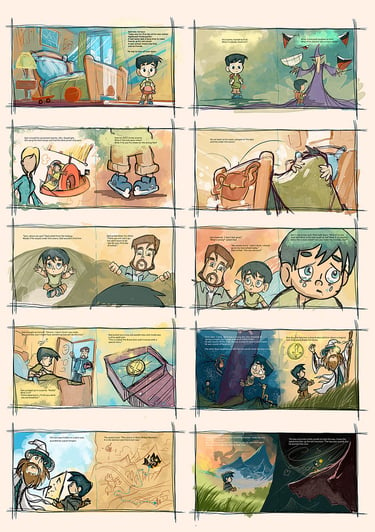
The 5 Elements of a Perfect Illustration Brief.
1. The Project Overview (The "Vibe" Check) Start with the big picture. What is this project? Who is the target audience? What is the emotional tone?
Bad: "It's a kids' book."
Good: "This is a 32-page picture book for ages 4-7. The tone is whimsical, slightly silly, and heartwarming. Think soft, warm colors and expressive, bouncy character designs."
2. Character Descriptions (The Stars of the Show) Don’t just tell the artist what the character is; tell them who the character is. Personality shines through in posture and expression.
Bad: "A dog wearing a hat."
Good: "Barnaby is a scruffy, golden-retriever mix with one flopped ear. He wears a slightly-too-big red bandana. He is perpetually optimistic, so his posture is bouncy, and he usually has a wide, goofy grin."
3. Setting the Scene (The World Building) Where are we, and what time is it? Lighting and environment dictate the mood of the piece. Mention the time of day, the weather, and any crucial background elements that must be in the frame for the story to make sense.
4. Visual References (Show, Don’t Just Tell) This is your superpower. Create a simple mood board. Include 3-5 images that show the style you like, the color palette you envision, or a specific pose you’re imagining. You aren’t asking the artist to copy these images; you’re just giving them a visual vocabulary to understand your taste.
5. Technical Specs (The Boring, But Crucial, Stuff) You don’t need to be a tech wizard, but you do need to know the basics. What are the final dimensions? Do you need a print-ready CMYK file or a web-ready RGB file? Do you need layered source files (like a PSD) or just a flat PNG? Getting this right upfront prevents heartbreaking formatting issues right before your book goes to print.
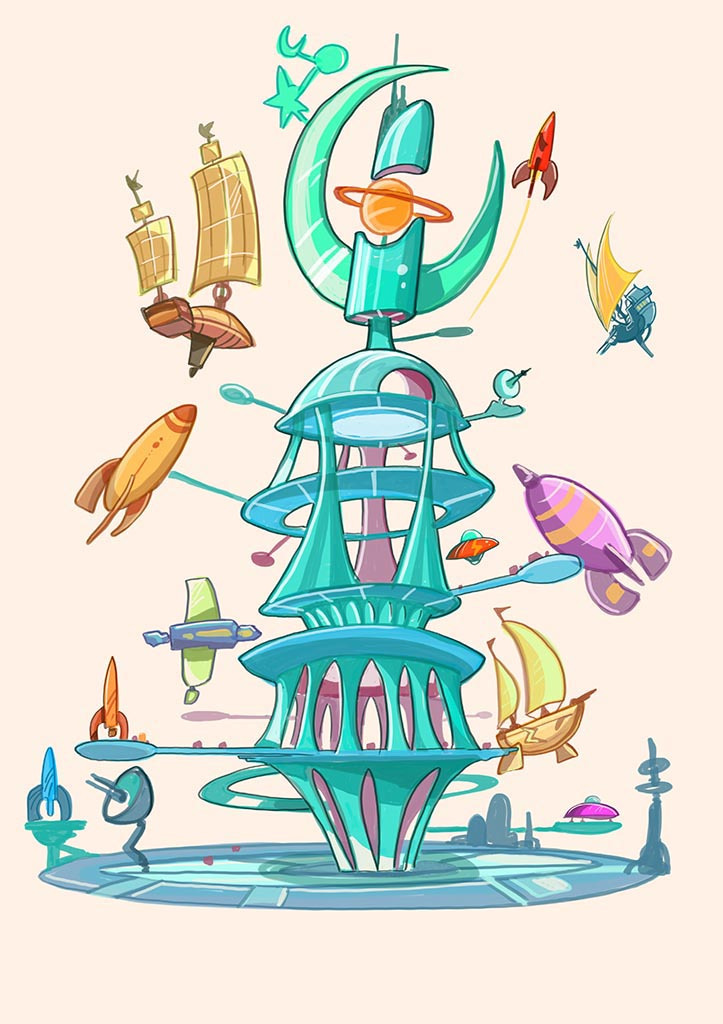
What NOT to Do (The “Please Don’t Make Us Do This” List).
I’ve seen it all, so let’s talk about the landmines.
First, don’t micromanage. You hired a professional children's book cover artist, freelance or concept pro, because you love their style. If you dictate every single brushstroke, you’re not hiring an artist—you’re hiring a human photocopier. And that kills the magic. Give your illustrator the ingredients, and let him or her, cook the meal!
Second, avoid copyrighted references like the plague. Telling an artist to “draw him exactly like this Disney character” or “make it look just like this Marvel poster” is a legal nightmare. Instead, say, “I love the bold, retro colour blocking from 80s cartoons, but with a softer, storybook feel.”
And finally, never say “I’ll know it when I see it.” That’s the fastest way to burn through revision rounds and blow your budget. Use the brief. It’s your roadmap!
Don’t use subjective fluff: Avoid phrases like "make it pop," "make it more magical," or "make it edgy." These mean nothing visually. Be specific: "Can we increase the contrast?" or "Can we add some glowing fireflies to the background?"
You hire a professional illustrator for a reason and you have to trust that any pro will do what´s best to make your book stand out. The worst and most common mistake any newbie indie author does his when a project starts with the typical, "It´s my vision!", because well, what people need to understand is that many times "your vision" may not be the right approach to create a great book. All the indie books failing out there many times have this in common so if you hire a professional illustrator do it with the trust that you are hiring that person because you know he will do the best work for you possible,
You don´t go to the dentist and tell him what is the best way for him to fix your teeth. You don´t go to a mechanic and instruct him on how to fix your car best. Treat the illustration process in the same way. Professional illustrators are called professional for that reason.
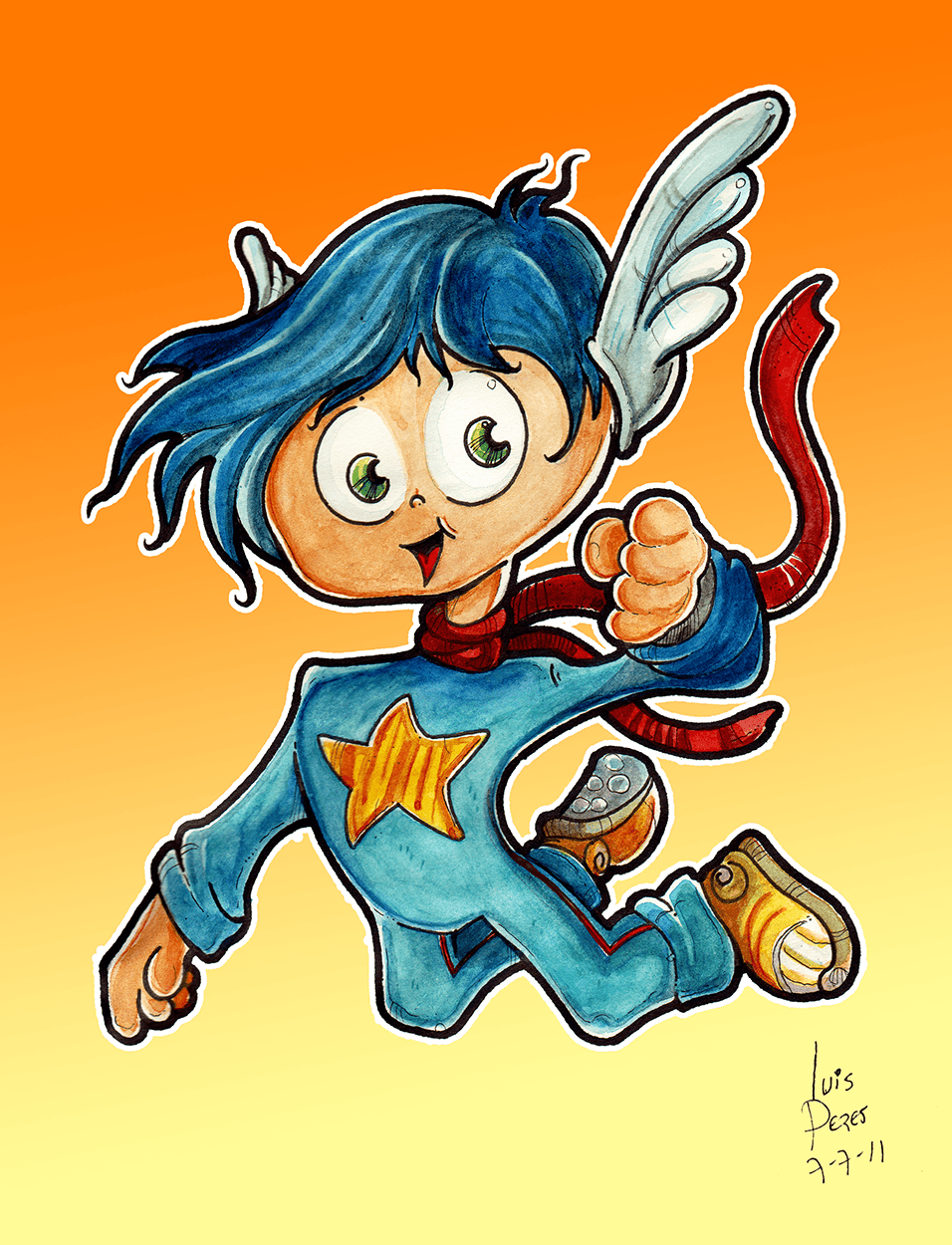
The iCreateWorlds Onboarding Process: I Do the Heavy Lifting for You.
Reading all this might make you think, "Wow, that sounds like a lot of work!" Don’t panic. This is exactly why choosing the right partner matters. When you are looking for recommendations for freelance children's book and cover artists, the top-rated professionals are those who actually guide you through this process, rather than leaving you to figure it out alone.
At www.icreateworlds.net, you will be asked the right questions, be helped to build your mood board, and have all the technical specs handled so you can focus on what you do best: creating.
Writing a brief doesn’t have to be a chore. It’s the exciting moment where your project officially becomes real. Take a deep breath, gather your thoughts, jot down your ideas, and get ready to watch your world come to life.
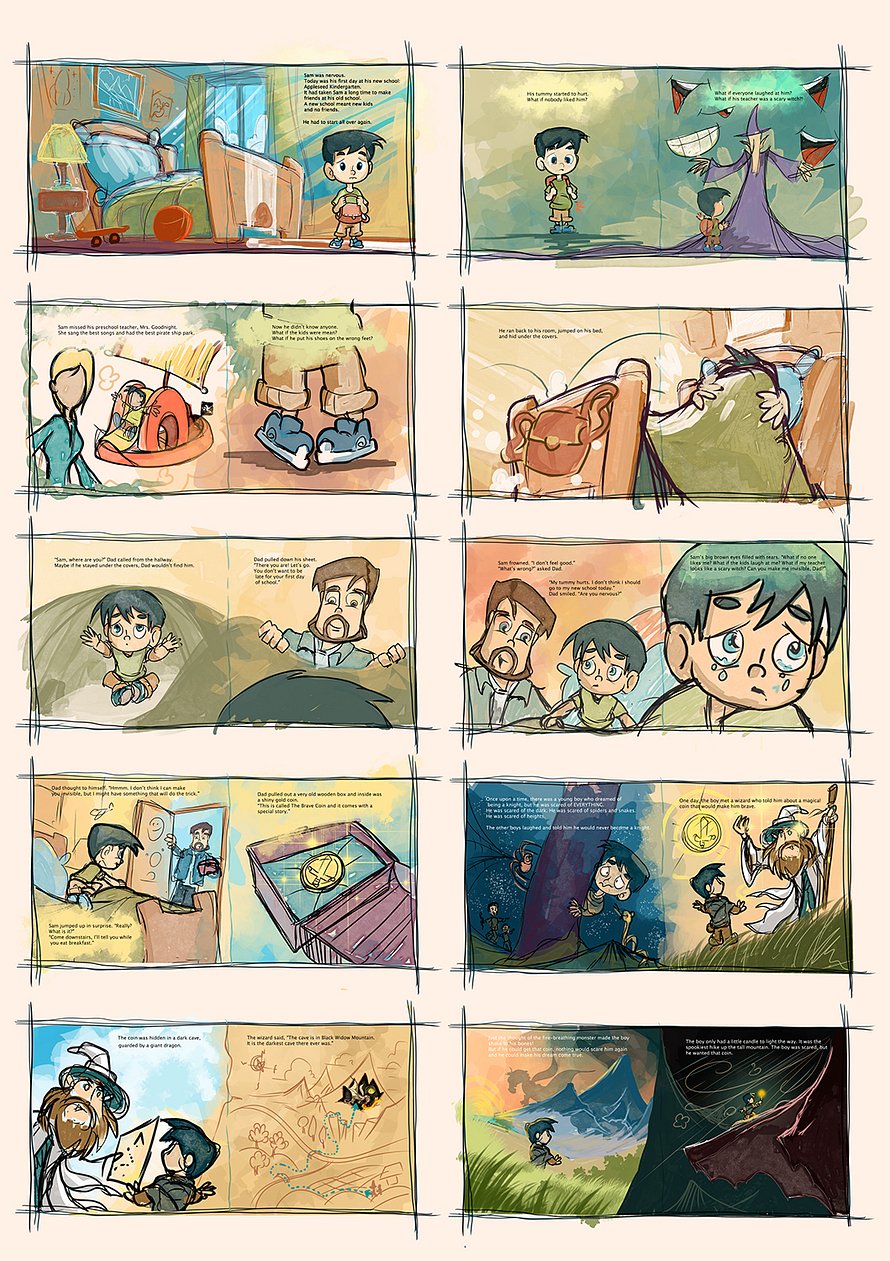
When it comes to children´s books, I usually start with the storyboard. Once I get the final text, I structure the whole story into a visual narrative, going from panel to panel, and then I create a test spread pic based on any scene of the storyboard. This way, the client can understand my process and how it works from the ground up.
Feel free to send me all additional information about the story. As I mentioned, explain the mood you are looking for, send me some pics of stuff you like as an example and give me a description of what your book is about, beyond what you have written in the story. For example, if you have a character going across a forest, although it´s not explained in the text, but you have it in your imagination, tell me about what you are imagining, and I will include it on the storyboard and test pic.
See, it does not have to be complicated. If you have a project for me, contact me today and let´s have fun with it.