Children´s book illustration Is Not an Empty Expense: Why Quality Art Makes or Breaks Your Story.
Investment in children's book illustration is not an empty expense. Discover why quality art determines your book's success in a $10B+ market. Looking for a children´s book illustration? Learn how important it is that you find the right freelance children´s book artist for your story.
LOOKING FOR A CHILDREN´S BOOK ILLUSTRATORCHILDREN'S BOOK ILLUSTRATOR FOR INDEPENDENT AUTHORSCHILDREN´S BOOK ARTISTSELF PUBLISHINGCOVER ARTIST NEEDEDFREELANCE CHILDREN´S BOOK ARTIST
By Alcaminhante
5/29/202611 min read
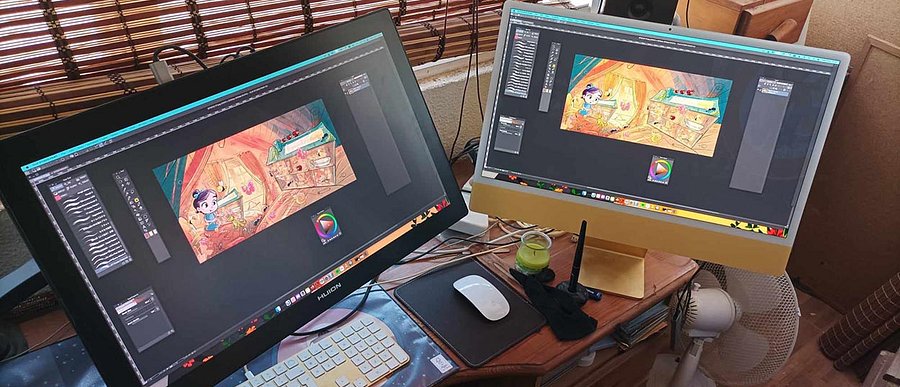
You've poured your heart into writing a children's book. The story is there. The characters are real to you. Now comes the moment that will define whether that story reaches children as a cherished memory—or quietly disappears into a sea of forgettable titles. That moment is choosing your illustrator.
The global children's books market grew from USD 9.85 billion in 2024 to USD 10.40 billion in 2025 and is expected to continue growing at a CAGR of 5.69%, reaching USD 13.74 billion by 2030 (consult reference sources at the end of this article to learn more). You are entering one of the most competitive, visually driven markets on the planet. Therefore, the single most consequential decision you will make is not the story itself — it's the quality of the art that brings it to life.
At ICreateWorlds, over my 34 years as an illustrator, I've seen it firsthand: authors spend months crafting a beautiful manuscript, then hand it off to the cheapest illustrator they can find online. The result? A book that looks like it was assembled in a weekend. The story dies before a child ever turns the first page.
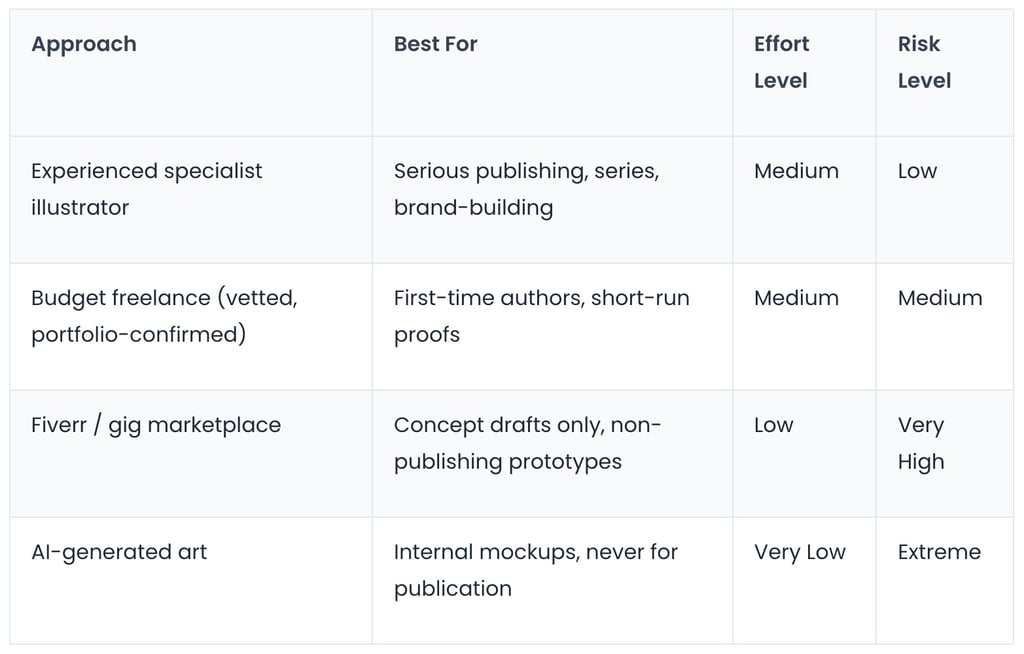
How to approach the different options.
Start with that info if you're:
Publishing for the first time: Choose a vetted specialist with a proven children's book portfolio and a formal contract — budget $3,500–$8,000 for a full picture book. This tends to be the generic approach out there for most freelance illustrators working for indie-authors.
In my particular case at ICreateWorlds.net, depending on the complexity of a project my rates for independent authors, can start at $2500 to a maximum of $5500, ( only really complex projects like 30+ pages comic book projects can reach $8000+ in my case, but for the majority of your typical 8.5x8.5´, 16 spread, (32 pages) children´s book, when I´m working for indie-authors or self publishing first time authors, I always do my best to keep costs between $2500 and $5500, with an average per project usually falling in between $3250 and $4750.Building a series: Invest in an illustrator who understands long-form character consistency and can deliver a recognizable visual identity across volumes.
On a tight budget: Do not default to the cheapest gig platform option. Instead, look for emerging illustrators with a strong portfolio who are building their career.
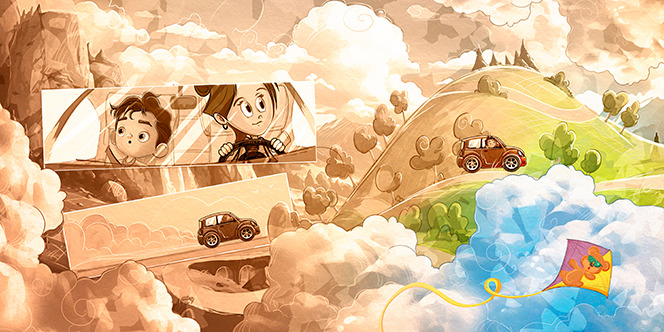
Why Illustrations Are the Heart of a Children's Book — Not a Decoration.
In the world of children's literature, words tell the story, but illustrations make children feel it. Young readers do not just decode text; they experience the stories through vibrant visuals that spark imagination, build understanding, and create lasting emotional bonds.
This is not a soft creative opinion. It's a developmental fact. Children respond first to characters before they notice plot or structure. A well-built character guides them through the story, teaches them something, and keeps them engaged from one page to the next.
This means that investing in children's book illustration is not an aesthetic luxury. It's structural. Without quality art, your story cannot function — no matter how brilliant the writing is.
What "Professional Quality" Actually Means.
Children's book illustration has principles that separate professional work from amateur attempts. These aren't arbitrary artistic preferences — they're practical rules that come from decades of publishing experience and child development research. Ignore them, and your book looks like a hobby project. Follow them, and you produce illustrations that publishers take seriously and that children actually engage with.
A professional illustrator doesn't just draw. They build a visual language that works across every page. In children's book illustrations, visual consistency is essential — not just for aesthetics, but for guiding and comforting young readers. A unified illustration style helps children easily recognise characters, follow the storyline, and stay emotionally connected from page to page.
Pro Tip: Before hiring any illustrator, ask to see multiple pages from a single completed book project — not a collection of individual illustrations. Anyone can produce one great image. Consistency across 32 pages is where real skill shows.
In my case, at ICreateWorlds.net, I always offer a storyboard and a test spread FREE of charge to any of my potential independent-authors clients. The idea is exactly so we both can see if we are good fit for the the book right at the start. And I do this for free because in that way, a new client can see that I´m also willing to take the risk. And yes, of course I will sign an NDA before you can let me see your story. If you don´t have one, I can provide a Non Disclosure Contract for you.
So if you have a project for me just contact me today.
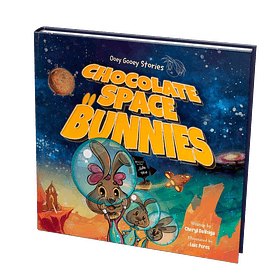
The Real Cost of Choosing the Wrong Illustrator.
Let's be honest. Platforms like Fiverr look tempting. Fast, cheap, and a massive pool of artists. But the children's book space carries specific risks that make budget gig platforms a dangerous gamble for serious publishing projects.
At ICreateWorlds.net, I´ve lost count of how many books I was hired to rework from scratch by new clients that initially had tried to go with the cheap or less expensive solution and then ended up having a bad result by hiring a Fiverr so-called professional illustrator with no experience. It´s like playing dice out there, and sometimes people end up with really bad choices.
The Quality Inconsistency Problem.
Poor quality and detail are a recurring problem with unprofessional illustrators. One illustrator corrects one thing, and when the PDF comes back, there is something else wrong — something as significant as a teal backpack turned red. The same illustrator had the 12-year-old protagonist look like an 8-year-old. This is a common problem with unprofessional illustrators.
Character consistency is non-negotiable. If your character doesn't look the same on every page, nothing else matters — the visual contract with the reader is broken. Budget gig illustrators rarely maintain character sheets or formal pre-production processes that prevent this drift.
The Publishing Standards Gap.
Fiverr artists often don't understand children's book publishing standards — trim sizes, spreads, print-ready formatting. This means you may receive finished illustrations that cannot be used for print-on-demand platforms like Amazon KDP or IngramSpark without expensive corrections. Some illustrators may be talented artists but may not know what is needed for ebooks and print. That can lead to a nightmare when all your illustrations are complete — and you find out they're the wrong format or size.
The A.I. Copyright Trap.
This is the most serious risk. There are many illustrators on sites like Fiverr who will do an entire picture book for less than $500. Unfortunately, these sites are filled with scams. I have had clients who told me their illustrators took the money and never sent illustrations. You also have illustrators who make entire books using clip art. But right now, the big problem is the temptation of A.I. generated imagery.
Yes, - imagery -, NOT illustrations.
If someone offers to illustrate your entire picture book for $200–$500, please pause. At those rates, you are almost certainly getting AI-generated art presented as original illustration. It will not hold up to publisher scrutiny, it may violate copyright law, and it does not honour the story you've worked so hard to write.
What a Real Investment in Illustration Delivers.
Authors who invest properly in illustration do not just get human-made pages, but they get a commercially viable book.
Storytelling That Functions Without Words.
Children see stories before they read them. In children's book illustrations, visuals guide emotions, hint at motives, and reveal relationships long before text does. A single illustration can communicate who a character is — brave, shy, mischievous, or kind.
A skilled illustrator turns your story into something that a 4-year-old who cannot yet read can follow, feel, and love. That is the difference between a book that sits on the shelf and one that gets read again and again.
Characters That Build Reader Loyalty.
Strong characters create repeat readership. They give publishers a competitive edge and, for example, help EdTech platforms build educational continuity. Recognisable characters improve brand identity and make the content more memorable.
If you plan a series — or even hope your book could become one — the quality of initial character design determines everything. A character built correctly from the start can anchor sequels, merchandise, and licensing opportunities. A character built cheaply has to be rebuilt entirely.
Market Differentiation in a Crowded Space.
More books competing for attention mean your illustrations need to stand out. Investing in a skilled character designer and professional illustrator is the single most effective way to differentiate your book in a crowded market.
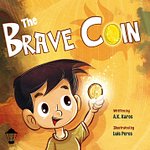
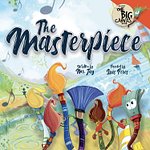
Pro Tip: Think of your illustrations as your book's marketing. Parents buying for children make purchasing decisions based on visual appeal within seconds. The cover and first interior spread are your sales pitch.
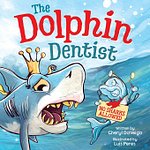
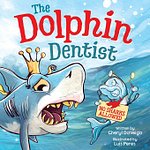
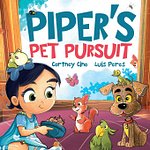
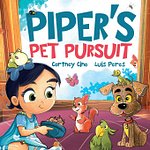
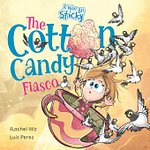
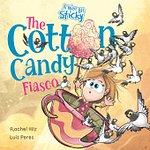
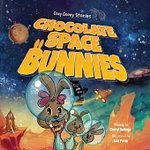
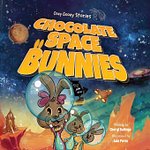
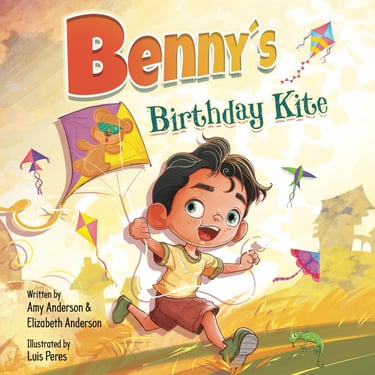
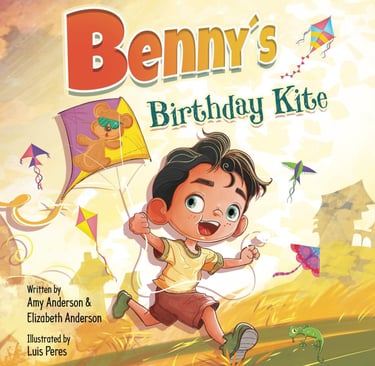
How to Evaluate an Illustrator Before You Commit.
Review Full Projects, Not Portfolios.
Always request to see completed, published books — not individual samples. Word of advice: if you're looking for your own children's book illustrator, don't assume the illustrations they show in their portfolio, on their websites, or on social media are the quality you'll get.
Require a Formal Contract.
The Society of Children's Book Writers and Illustrators strongly recommends that all rights and usage be clearly defined in a written contract before any work begins. If an illustrator doesn't offer a contract, that's a warning sign.
Verify Publishing Knowledge.
Ask your illustrator directly: Do they deliver print-ready files at 300 DPI in CMYK? Do they understand bleed, trim sizes, and spread formatting for KDP or IngramSpark? Professionals understand page counts, bleed, trim sizes, and layout for platforms such as IngramSpark and Amazon KDP. If they don't know what those terms mean, move on. They don´t need to know the specifics of each platform out there, but at least every illustrator must be aware of their existence and have a brief idea of what they do, also to advise clients.
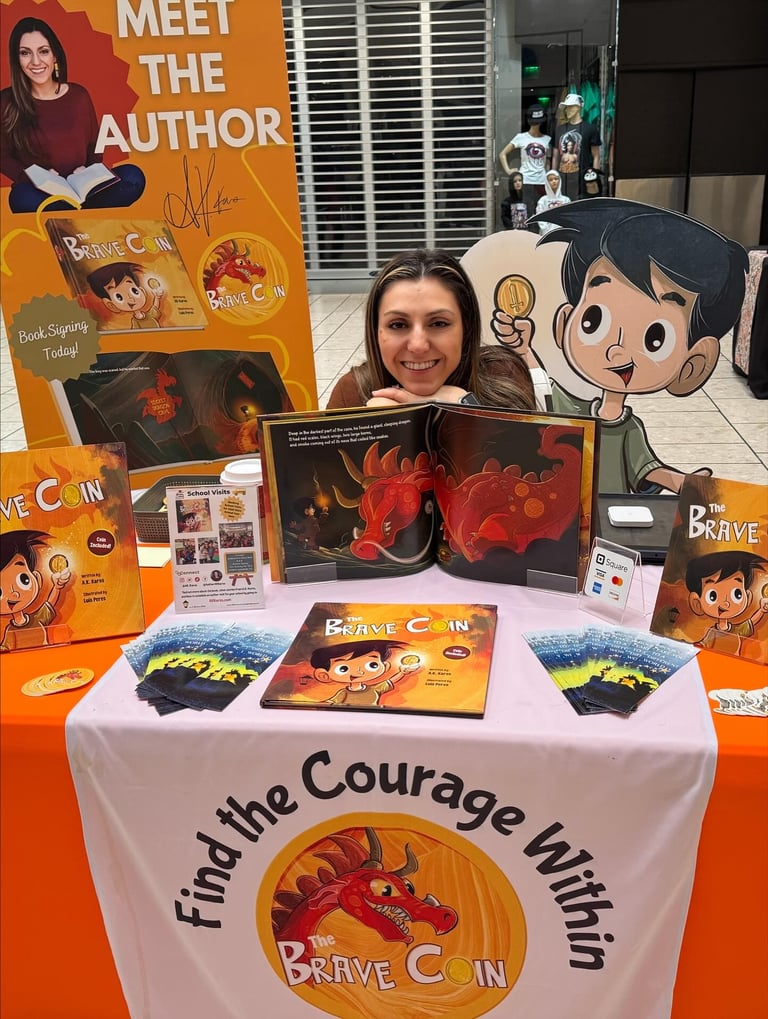
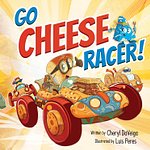
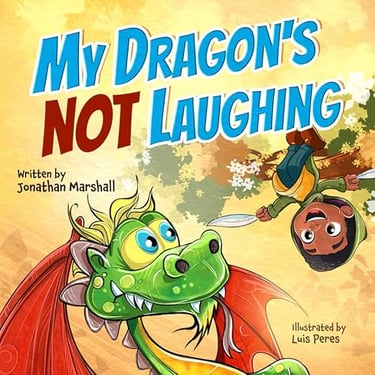
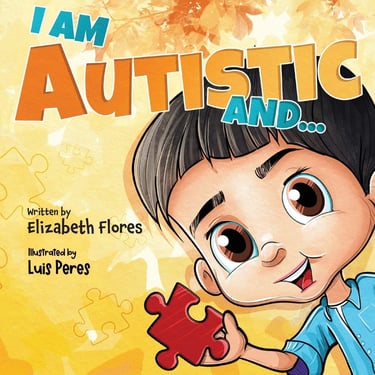
Pro Tip: At ICreateWorlds — Luis Peres Illustration, with over 30 years of professional experience since 1992, every project includes a full storyboard, full illustrated spread pics, individual illustrations with transparent background for other uses and fully editable PSD files. Also if requested, a fully publishing-ready file ( some authors have their own book designers outside ), and a collaborative process built around your story's vision — not just pretty pictures.

Frequently Asked Questions.
Is professional children's book illustration really worth the cost?
Yes — without exception, for any author serious about publishing. High-quality illustrations can significantly boost the marketability of your book. In a crowded market, professionally illustrated books are more likely to stand out and attract readers. The illustration is not a line item to minimise — it is the product.
What's the realistic budget for a full children's picture book?
For a first-time self-publishing author, look for an experienced mid-level illustrator with a strong portfolio, published work, a clear process, and a contract. If you are not hiring me at ICreateWorlds, then you need to budget $3,500–$8,000 for a full picture book.
No matter the price, don't sacrifice quality for savings — the illustrations are what children and parents see first.
As I mentioned before, In my particular case at ICreateWorlds.net, depending on the complexity of a project my rates for independent authors, can start at $2500 to a maximum of $5500, ( only really complex projects like 30+ pages comic book projects can reach $8000+ in my case, but for the majority of your typical 8.5x8.5´, 16 spread, (32 pages) children´s book, when I´m working for indie-authors or self publishing first time authors, I always do my best to keep costs between $2500 and $5500, with an average per project usually falling in between $3250 and $4750.
If I need to go less expensive, can I use Fiverr for a children's book I plan to publish commercially?
While Fiverr may look less expensive at first, professional illustrators often save time, stress, and money in the long run by delivering print-ready, high-quality work the first time. Fiverr might make sense if you're experimenting, creating a one-off draft, or testing story concepts with visuals. A professional illustrator is the better choice if you're serious about publishing, want to build your author brand, and value quality illustrations that will last.
How do I protect myself from AI art being passed off as original illustration?
This type of scam used to be incredibly popular, especially on Fiverr. A major red flag is inconsistent visual styles across different elements of an illustration — for example, the sky might be a flat cartoonish gradient while the characters look hyper-realistic or 3D ( with the same Pixar style no matter the "illustrator" you choose). Always request process documentation — sketches, revision stages, and character reference sheets — before making any final payment.
In my case I usually also send in a making of video of some of the process. Or you can take a look at all my making of videos in my page if you want to learn more about how I create my illustrations.
Bottom line: Your story deserves to be seen. From improving engagement and supporting cognitive development to influencing buying decisions and building emotional connections, illustrations directly impact a book's success. Investing in quality illustration isn't a luxury — it's the foundation your book is built on.
If you're ready to give your story the visual life it deserves, explore my work, here at ICreateWorlds — Luis Peres Illustration — three decades of experience building worlds that children remember.
Sources
Children's Books Market Size & Forecast — Research and Markets. Global market analysis 2024–2030. https://www.researchandmarkets.com/report/children's-book-market
Why Professional Children's Book Illustration Services Matter — Prayan Animation. Analysis of illustration's role in storytelling and publishing. https://www.prayananimation.com/blog/why-professional-childrens-book-illustration-services-matter/
5 Key Rules for Great Children's Book Illustration — US Illustrations. Professional standards and character consistency. https://www.usillustrations.com/blog/5-key-rules-for-childrens-book-illustration
Fiverr vs Professional Children's Book Illustrators — The Painted Acorn. Comparative analysis of hiring approaches. https://www.thepaintedacorn.ca/blog/fiverr-vs-professional-childrens-book-illustrators
What Can Go Wrong With Children's Book Illustrations — Karen Cioffi Writing for Children. Real-world quality failure case studies. https://karencioffiwritingforchildren.com/2024/08/04/so-what-can-go-wrong-with-childrens-books-illustrations/
Picture Book Illustration Pricing Guidelines 2026 — With Love Laxmi. SCBWI-referenced pricing standards for self-publishing authors. https://www.withlovelaxmi.com/blog/how-much-should-you-charge-for-illustrating-a-childrens-book-picture-book-pricing-guidelines
Why Children's Book Illustrators Are Angry About AI — Kelley Donner. Copyright risks of AI-generated art in children's publishing. https://kelleydonner.com/blog/2023/5/11/why-childrens-book-illustrators-are-angry-about-ai
Why Consistency Matters in Children's Book Illustrations — The Rainbow Stories. Visual consistency's impact on engagement and publishing. https://therainbowstories.com/why-consistency-matters-in-childrens-book-illustrations/