Human Illustration in the Age of AI: Why Real Artists Still Matter
Discover why human illustration still matters in the age of AI. Explore children's book illustration, concept art, cover art, and digital painting created by real artist Luis Peres at ICreateWorlds, where creativity, storytelling, and craftsmanship come first.
HUMAN ILLUSTRATORDIGITAL ILLUSTRATION VERSUS TRADITIONAL ILLUSTRATIONCHILDREN´S BOOK ARTISTHOW TO GET A CHILDREN'S BOOK ILLUSTRATEDCONCEPT PAINTINGS AND WORLDBUILDING ARTDIGITAL ART VERSUS TRADITIONAL ILLUSTRATION
By Alcaminhante
5/31/20266 min read
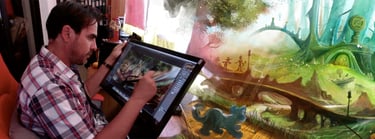
Human Illustration in the Age of AI: Why Real Artists Still Matter.
If you've spent any time online recently, you've probably noticed that AI-generated imagery is everywhere. Type a few words into a prompt, wait a few seconds, and suddenly you have a dragon riding a bicycle through Victorian London while eating ice cream. It's impressive technology, no doubt about it. Sometimes it's even beautiful. But here's the thing.
Beautiful imagery and great illustration are not necessarily the same thing. As AI-generated images become more common, one question is increasingly important for authors, publishers, game developers, and clients seeking artwork:
"Is there actually a real illustrator behind this work?"
Oddly enough, in 2026, that question matters more than ever.
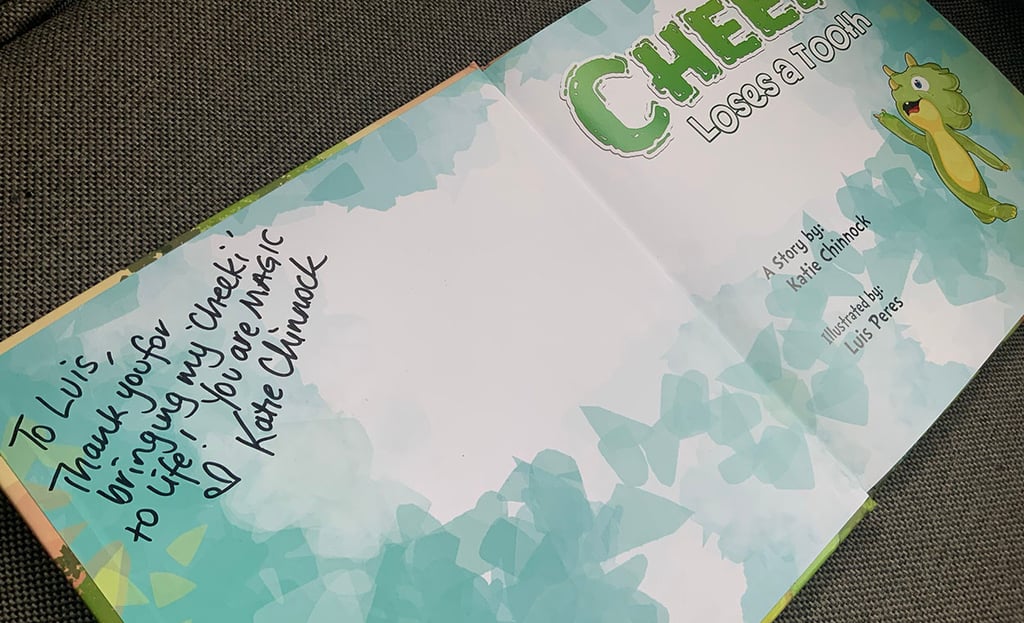
The New Challenge: Proving You're Human!
A few years ago, if you hired an illustrator online, you naturally assumed there was a real person sitting behind a drawing tablet, sketchbook, or computer creating the artwork. Today, that's no longer a given.
Many portfolios showcase impressive images, but it's often difficult to know whether those images were carefully crafted by an experienced artist or simply generated through text prompts.
For clients investing in children's books, cover art, board game art, concept art, or publishing projects, that's an important distinction. Not because AI imagery is automatically bad. But because real illustration is about much more than producing a pretty picture.
It's about storytelling. It's about visual problem solving. It's about making creative decisions. It's about understanding what a client wants and transforming that idea into something unique.
A real illustrator doesn't simply generate an image. A real illustrator creates a visual solution.
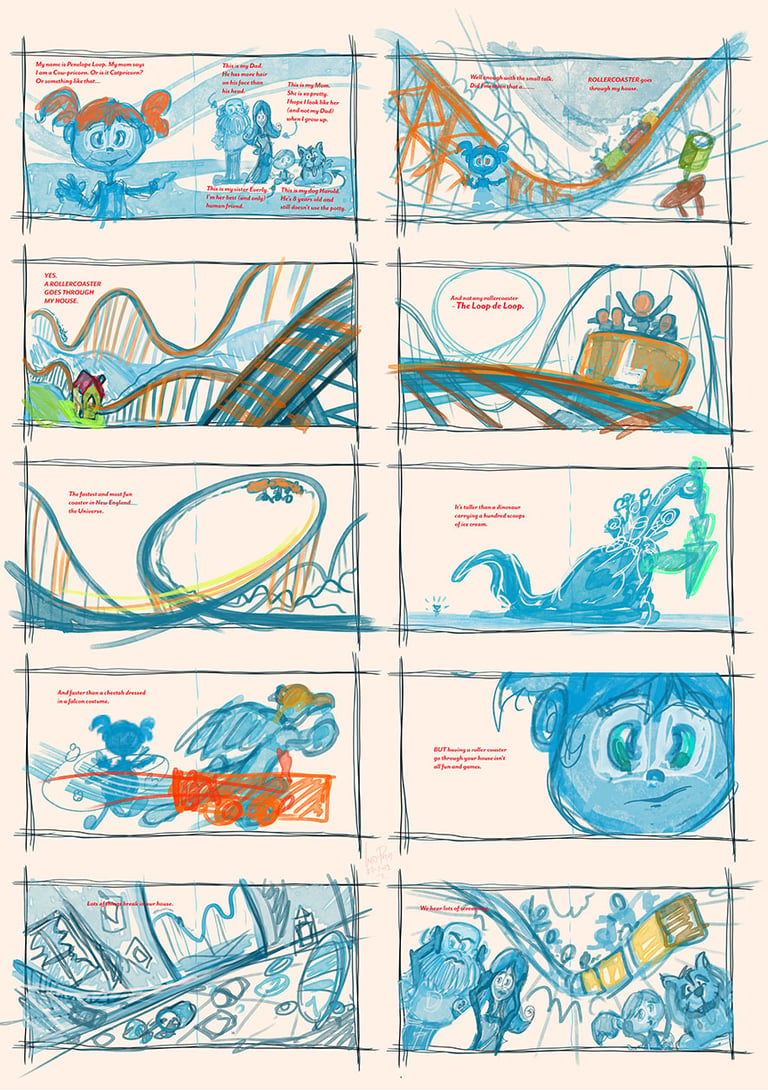
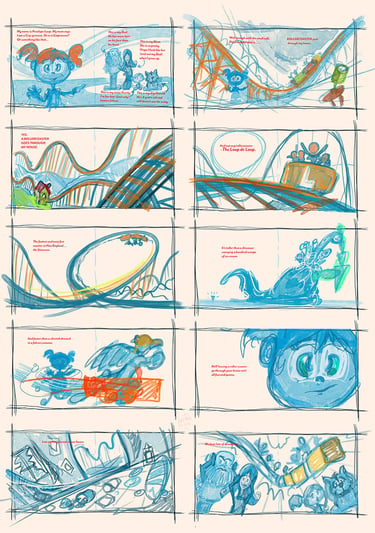
Imagery vs Illustration.
This is where things often get confused. AI is excellent at generating imagery.
Illustrators create illustrations. Those two things might sound similar, but they're actually very different.
An illustration is designed with purpose. Every character expression, every object placement, every colour choice, every visual detail serves a specific storytelling goal. When illustrating a children's book, for example, the artwork isn't just there to look pretty. It needs to support the narrative.
It needs to guide the reader's eye. It needs to communicate emotion. It needs to create visual continuity from page to page. It needs to make children want to turn the page and discover what happens next.
That level of planning comes from a human mind thinking about the story.
Not from a prompt.
The Children's Book Problem.
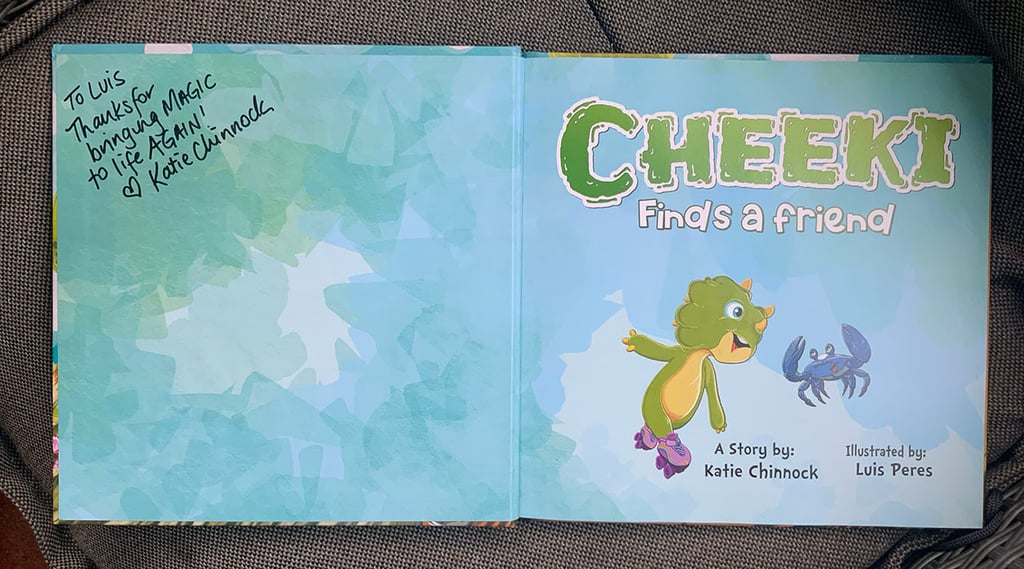
One area where the difference becomes particularly obvious is children's book illustration. AI-generated children's book imagery often looks technically polished at first glance.
Bright colours.
Big eyes.
Cute characters.
Soft lighting.
In many cases, it resembles what could best be described as a "Temu version of Pixar."
Everything is shiny. Everything is colourful. Everything is trying very hard to be adorable. And yet, somehow, it often feels oddly empty. Sterile. The human brain recognises that there is something odd, and that is why more and more people are rejecting children´s books illustrated by prompts and not real human artists.
The characters may look appealing, but they rarely feel genuinely designed. The visual storytelling can become inconsistent. Character proportions shift. Expressions change unexpectedly. Important details disappear from one page to the next.
The images may be attractive individually, but together they often lack the visual cohesion that makes a great children's book work.
A human illustrator understands character design, story pacing, visual continuity, and emotional storytelling. Those aren't accidents. Their skills developed through years of practice.
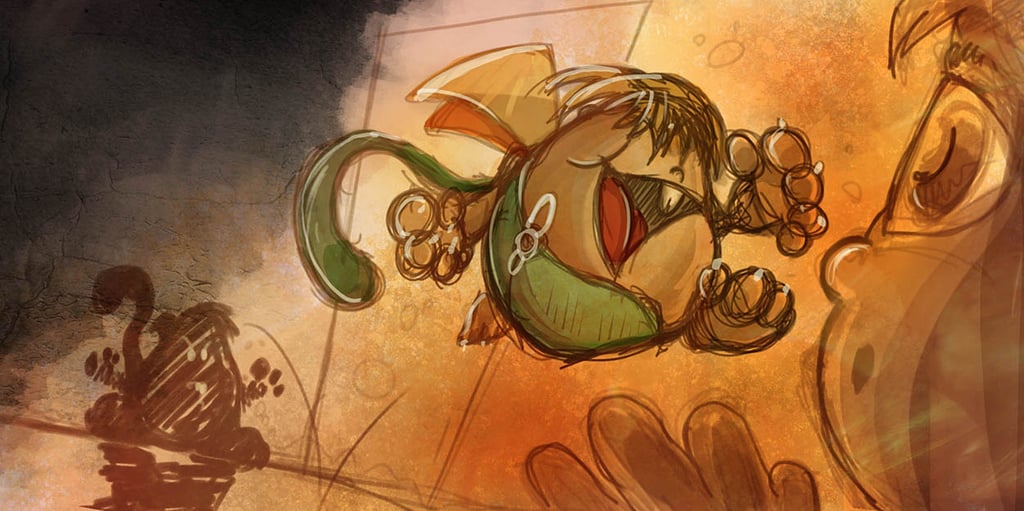
Digital Art Is Not AI Art!
Another misconception that appears surprisingly often is the idea that digital illustration and AI-generated imagery are somehow the same thing. They are not. Not even remotely. A digital painting is still a painting.
The only difference is that the artist uses a tablet and software instead of brushes and canvas. The creative process remains fundamentally human. The artist sketches. The artist experiments.
The artist makes mistakes. The artist revises.
The artist changes colours.
The artist refines compositions.
The artist solves visual problems.
The artist makes thousands of creative decisions throughout the process.
That's an illustration.
Whether it's created with oil paints, watercolours, acrylics, pencils, Procreate, Clip Studio Paint, Photoshop, or any other digital painting software, the artwork still originates from a human creator. Digital tools simply simulate traditional artistic materials in a modern environment. The imagination driving those tools remains entirely human.

Showing the Process Matters.
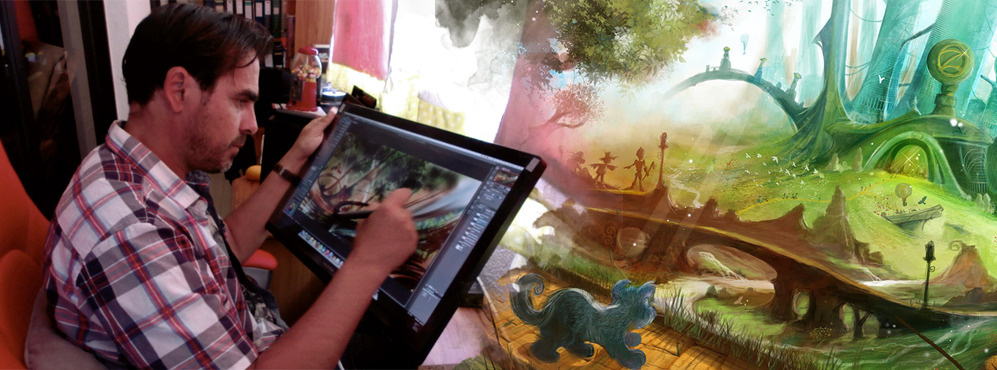
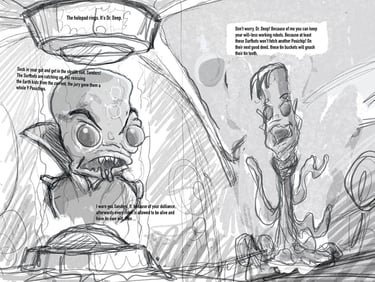
This is one reason why making-of videos have become increasingly valuable. At ICreateWorlds, visitors can view multiple making-of videos that demonstrate exactly how illustrator Luis Peres creates his artwork. These videos reveal something important.
The images don't magically appear. They evolve. A rough sketch becomes a refined drawing. Shapes are adjusted. Lighting is developed. Colours are explored. Textures are added. Details emerge gradually.
The artwork grows through a series of deliberate creative choices made by a real artist. Clients can literally watch the illustration being constructed from the ground up.
That transparency is becoming increasingly important in a world where AI-generated imagery can appear instantly. The process demonstrates craftsmanship. It demonstrates thought. Most importantly, it demonstrates that there is a real human being behind the artwork.

Why Human Creativity Still Has Value.
The truth is that illustration has never been about simply producing an image. It's about communication. When an author hires an illustrator for a children's book, they're not just buying pictures. They're hiring someone to help tell a story. When a game studio commissions concept art, it's not just looking for pretty visuals.
They're hiring someone to help define a world.
When a publisher commissions a cover, they're not just buying an image. They're investing in the first impression readers will have of that book. Those creative challenges require collaboration.
They require interpretation.
They require understanding.
And those remain profoundly human skills.
The Problem with Generic Perfection.
One of the strange things about AI imagery is that it often looks incredibly polished yet feels generic.
You may have seen this yourself.
An image can be visually impressive and technically flawless, yet somehow forgettable.
That's because perfection isn't necessarily what makes art memorable. Personality does. Quirks do.
Unexpected creative choices do.
The little imperfections that come from a real human mind making artistic decisions often become the very things that give artwork character. Real illustrators bring their own experiences, influences, humour, emotions, and perspective into every project.
That's difficult to replicate through automated image generation, no matter how advanced the technology becomes.
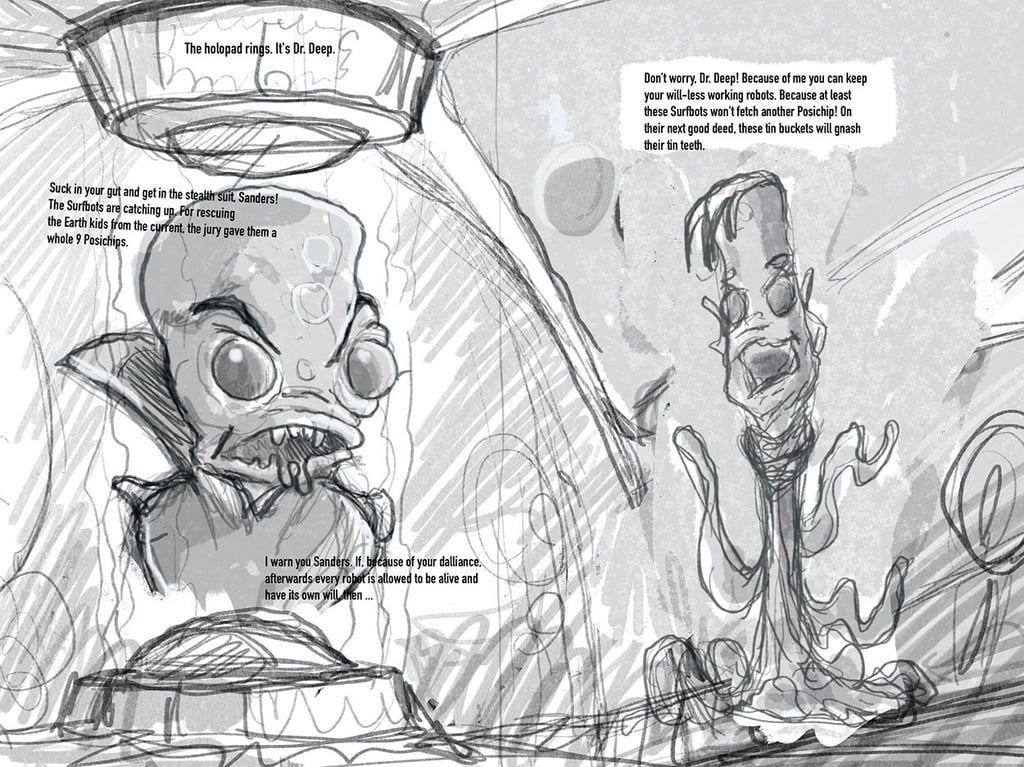
Looking Forward
AI isn't going away. Nor should it. Like every new technology, it will find its place. But the rise of AI imagery has also highlighted something important. People still value human creativity. They still value craftsmanship.
They still value authenticity.
And they still value working directly with a real artist who understands their project and cares about the final result.
At ICreateWorlds, every illustration is conceived, planned, painted, refined, and completed by a real human illustrator.
Whether it's children's book illustration, cover art, board game art, concept art, character design, or commercial artwork, the creative decisions remain human from start to finish.
The software may be digital.
The tablet may replace a canvas.
But the imagination, storytelling, artistic judgement, and craftsmanship behind every image remain exactly where they've always been.
In the hands of the artist.
And in an age increasingly filled with generated imagery, that human touch may be more valuable than ever.